12 June 2026 · 3 min read
Secondhand vs New Furniture: Cost, Quality & Environment Compared
How secondhand furniture stacks up against new when it comes to price, build quality and environmental impact — and where the trade-offs actually land.
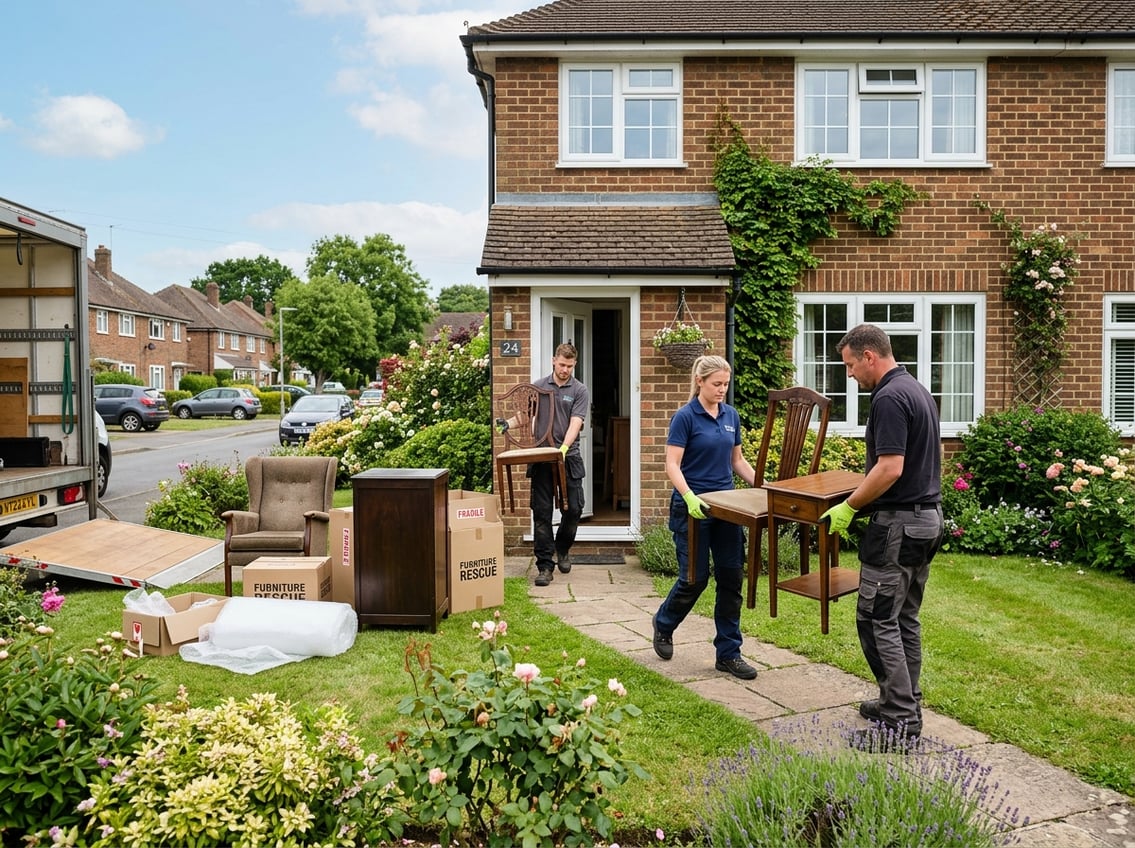
Every household eventually asks the same question: do we buy new, or do we go secondhand? Both have a place. But the trade-offs aren't always where people expect. Here's a plain comparison across the three things that actually matter — cost, quality and environmental impact.
Cost: secondhand almost always wins
For like-for-like build quality, secondhand furniture is usually 40–80% cheaper than new.
- A solid-oak sideboard that would retail new at £900–£1,400 turns up secondhand at £180–£400.
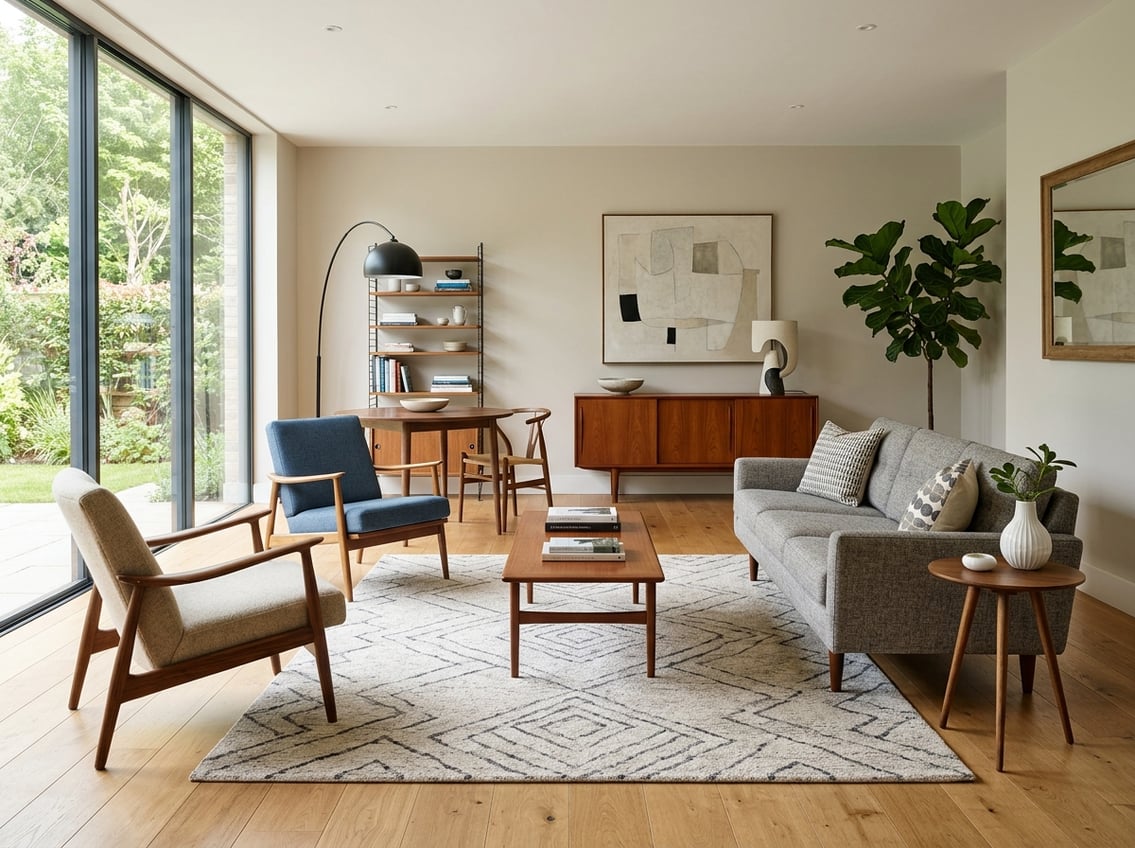
- A mid-century teak dining set that would cost £2,000+ from a specialist retailer sells used for £400–£700.
- A well-made vintage armchair often costs less used than a flat-pack equivalent new.
Where new wins on price is the bottom end of the market — a £120 flat-pack bedside cabinet is hard to beat if you just need something in a hurry. But at that price point you're comparing a chipboard-and-veneer piece against a solid-wood secondhand alternative in the same bracket. It's rarely close on value.
Quality: it depends when the piece was made
This is where new furniture struggles. Modern mass-market furniture is optimised for flat-pack shipping and warehouse assembly, which means:
- Particleboard and MDF cores instead of solid wood.
- Cam-lock fittings instead of glued joinery.
- Thin veneers that chip through in a few years of use.
A well-made secondhand piece from the 1950s–1980s was built to a completely different brief: shipped assembled, expected to last a lifetime, and made from timber that's difficult to source at that price today.
The catch is that "well-made secondhand" isn't the same as "old". A tired 1990s pine dresser isn't automatically better than a new one. Look for:
- Solid-wood construction (not veneer over particleboard).
- Dovetail or dowelled joinery, not stapled boards.
- Maker's marks from established manufacturers.
Our buying guide covers the checks in detail.
Environmental impact: not close
Furniture has a bigger environmental footprint than most people realise. The Furniture Recycling Charity estimates around 22 million pieces of furniture are discarded in the UK every year, with most ending up in landfill. Every new piece you buy also carries the carbon cost of:
- Felled timber (often shipped from overseas plantations).
- Manufacturing energy.
- Container shipping and last-mile delivery.
- Cardboard, plastic and polystyrene packaging.
Buying secondhand skips all of that. The piece already exists. Its carbon cost was paid decades ago, and every extra year of use dilutes that cost further. Reuse is, by a wide margin, the single most effective thing an individual household can do to reduce furniture-related emissions.
Recycling helps, but it's a distant second — most furniture recycling is downcycling, breaking materials down to lower-grade uses. Reuse keeps the piece intact and in service.
We've written more about the environmental case for reuse here.
Where new does make sense
Secondhand isn't the right call for everything.
- Mattresses — always buy new for hygiene reasons.
- Upholstery you can't inspect — if you can't sit on it and lift the cushions, be cautious.
- Fitted furniture — bespoke built-ins are a new-only category.
- Modern-only styles — some contemporary designs simply don't exist in the secondhand market yet.
For everything else — sideboards, dining tables, chairs, cabinets, dressers, mirrors, occasional furniture — secondhand is the smarter, cheaper, greener choice.
The short version
| Secondhand | New (mass-market) | |
|---|---|---|
| Price | 40–80% cheaper | Higher for equivalent |
| Materials | Often solid wood | Often particleboard/MDF |
| Joinery | Dovetail, dowelled, glued | Cam-lock, stapled |
| Lifespan | Decades | 5–15 years typical |
| Carbon cost | Already paid | Freshly incurred |
| Style | Character, unique | Uniform, replaceable |
If a piece exists, someone already made it, someone already paid the carbon cost, and someone else no longer needs it. That's the case for buying secondhand furniture in a sentence.
Have a look at what's currently in stock — most of it costs less than the equivalent new, and all of it will outlast the equivalent new.