19 June 2026 · 4 min read
How to Style Secondhand Furniture in a Modern Home
Practical tips for mixing secondhand, vintage and antique furniture with modern interiors — how to combine eras, pick colour palettes and let one-off pieces anchor a room.
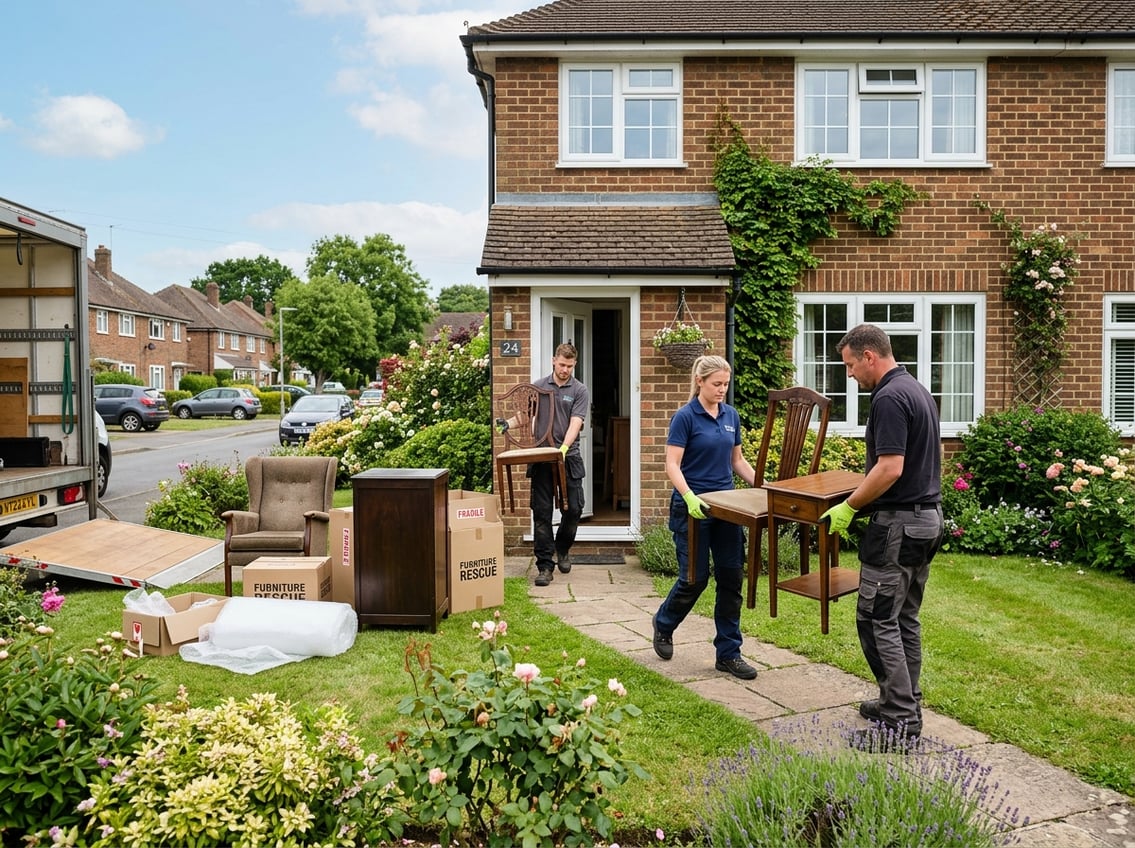
One of the questions we hear most often at Secondhand Furniture Kent is some version of: "Won't it look mismatched?" The honest answer is no — unless you try to make everything match. Mixing secondhand, vintage and modern pieces is what stops a room feeling like a showroom catalogue. Here's how to do it well.
Anchor the room with one strong piece
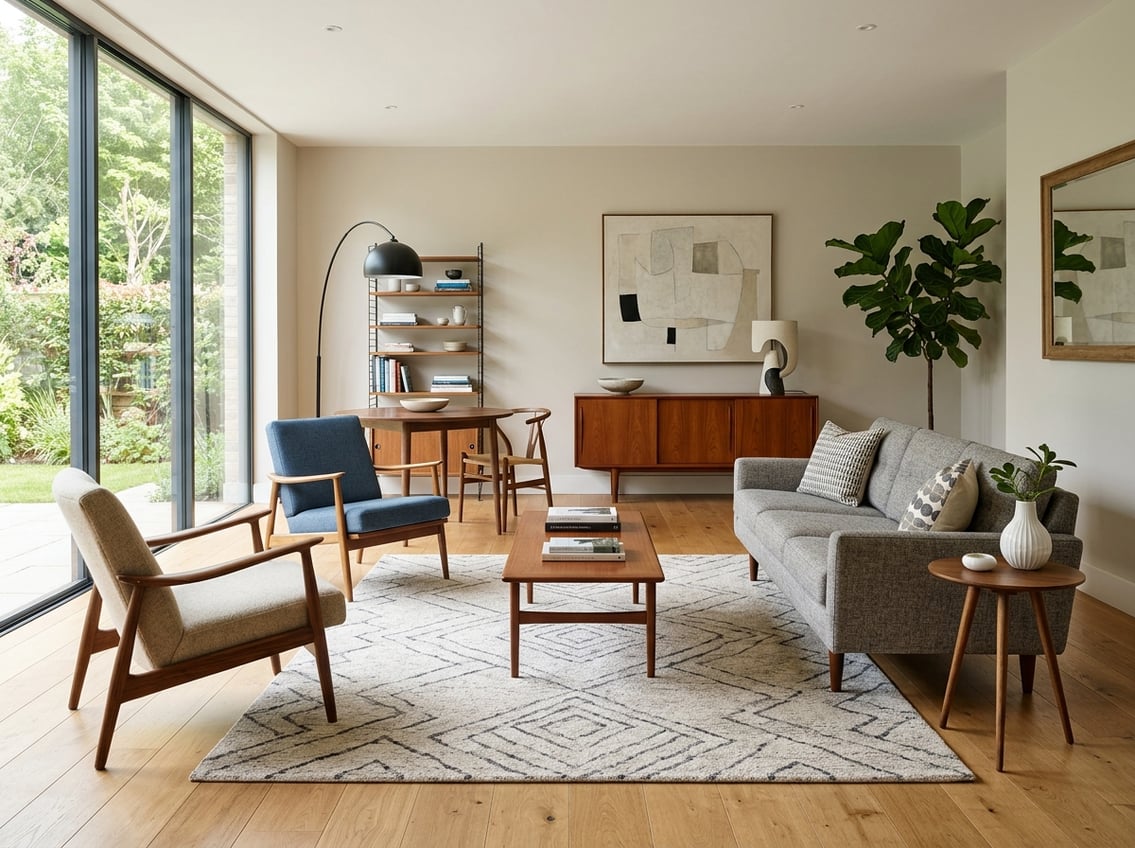
Every room needs a lead. In a living room it's usually the sofa or the sideboard. In a bedroom, the chest of drawers. In a dining room, the table.
Pick one piece of real presence — a mid-century sideboard, an antique dresser, a solid-wood dining table — and let everything else sit around it. Character pieces need breathing room. Trying to make three vintage statement pieces share a wall usually reads as busy, not curated.
Mix eras deliberately, not accidentally
The mistake with mixing eras isn't the mixing — it's the mixing without a common thread. Pick one of the following and repeat it across the room:
- A material. Warm timber tones (teak, oak, walnut) work across mid-century, antique and modern pieces.
- A colour. A muted background palette (cream walls, soft greens, warm greys) lets any era of furniture sit against it.
- A silhouette. Tapered legs, curved arms, low profiles — pick one shape language and echo it in a couple of pieces.
An antique dresser can share a room with a modern linen sofa if they share, say, a warm oak tone or a rounded silhouette. What breaks the mix is putting a heavy Victorian mahogany chest next to a chrome-and-glass side table with nothing between them.
Let old finishes stay old
Secondhand furniture is bought for its character. Refinishing a mid-century teak sideboard to look brand new strips the exact quality that made it worth buying. A few water rings, softened edges and honest patina are what date a piece to a decade — and dating a piece is how a modern room stops looking generic.
If a mark genuinely bothers you, a light wax or Danish oil evens tone without hiding history. Full sanding and re-staining is usually a downgrade.
Colour: use secondhand pieces as neutrals
The trick modern interior designers use, and that works especially well with vintage furniture: treat your wood pieces as the neutral, and let textiles carry the colour.
- Warm timber sideboard + off-white walls + a single strong-colour rug or throw = a room that reads as intentional.
- Anchor with dark walnut or teak if you want depth; pine or ash if you want lightness.
- Match wood tones loosely, not exactly. Two shades of warm brown in the same room is fine. A warm oak next to a cold grey-brown reads as clashing.
Scale is more important than style
The single most common mistake with secondhand furniture is buying a piece that's the wrong size for the room — usually too big. A gorgeous Victorian wardrobe in a small bedroom eats the room. A dainty mid-century coffee table in a large open-plan living room disappears.
Before buying, tape out the footprint of the piece on the floor with masking tape. If you're mixing an antique piece with modern furniture, check that the heights work — an old dining chair against a modern table (or vice versa) often ends up with elbows in the wrong place.
Group by tone, not by set
Matching furniture sets are the fastest way to make a room look mass-produced. Instead, group secondhand pieces by tone or era without matching them exactly.
- Two different mid-century chairs in similar teak tones read as a curated pair.
- Two identical repro chairs read as a set from a catalogue.
The eye finds the "collected over time" look more restful and more interesting than a matching suite.
A few genuinely useful pairings
- Mid-century sideboard + modern linen sofa + wool rug in earth tones.
- Antique bureau + modern desk chair + brass reading lamp.
- Vintage dining table + mismatched-but-similar-tone dining chairs.
- Old pine dresser + modern lighting + potted plants for softness.
Every one of these combinations works because a single character piece is doing the heavy lifting and the modern elements are staying quiet.
The short version
- One statement piece per room.
- Mix eras but repeat a colour, material or silhouette.
- Let old finishes stay old.
- Measure the room, not just the piece.
- Group by tone, not by set.
Ready to find your anchor piece? Browse the current collection — most of what we list is one-of-a-kind, so if it catches your eye it's usually worth acting on. Or, if you're weighing up whether secondhand is the right call for your home, our secondhand vs new comparison covers the trade-offs.