
5 June 2026 · 3 min read
Secondhand Furniture Buying Guide: What to Check Before You Buy
A practical guide to buying secondhand furniture — how to check condition, spot solid construction, and avoid common pitfalls when buying vintage or pre-loved pieces.
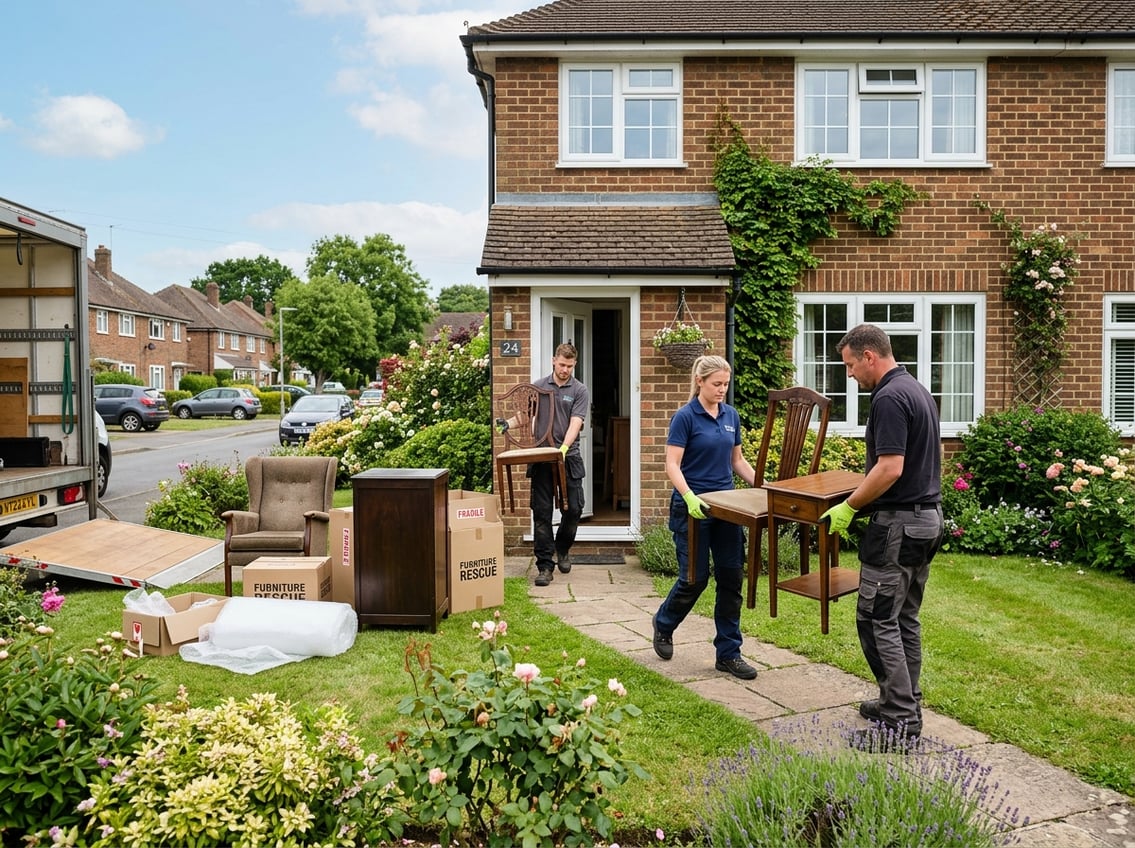
Buying secondhand furniture is one of the best ways to get quality pieces at a fraction of high-street prices — and it's kinder to the planet. But a used piece needs a slightly different eye than a shrink-wrapped one in a showroom. Here's what we look for when we source stock, and what you should check before you buy.
Start with the frame, not the finish
The finish (paint, veneer, upholstery) is cosmetic. The frame is what determines whether a piece will last another 30 years or fall apart next winter.
- Solid wood beats veneer over particleboard. Tap the side of a cabinet — solid wood sounds dense; MDF or chipboard sounds hollow.
- Check the joinery. Dovetail joints in drawers, mortise-and-tenon joints in chair frames, and dowelled backs on cabinets all point to older, better construction.
- Look under and behind. Manufacturers of the mid-century and earlier put effort into places you couldn't see. Modern flat-pack usually didn't.
If the bones are good, cosmetic wear is character. If the bones are wonky, no amount of polish will save it.
What "condition" actually means
Every honest secondhand furniture listing should describe condition plainly. When we photograph a piece, we shoot the marks as well as the good angles. When you're buying, look for:
- Sun-fade on tabletops or one side of a cabinet — cosmetic, usually.
- Water rings and heat marks — cosmetic on solid wood, more of an issue on veneer.
- Woodworm holes. Old, sealed holes are usually inactive. Fresh, powdery holes with sawdust nearby are a live infestation — walk away.
- Wobble. Rock the piece gently. A slight wobble on a chair is often a loose joint that can be re-glued. A pronounced wobble on a table means a structural repair.
- Drawers and doors. Every drawer should slide, every door should close.
Chairs and sofas: sit on them
Frames are usually fine on older seating. What fails is springs, webbing and foam.
- Sit down. A sunken seat that doesn't push back means dead springs or crushed foam.
- Check the springs. On older sofas you should be able to feel the spring band from underneath — if any are broken, factor in a re-spring.
- Upholstery. Small tears and worn arms are character. Anything that smells musty or damp is a hard pass.
Measure. Then measure again.
The most common secondhand-buying regret isn't condition — it's a piece that won't fit through the door.
- Measure the item (H × W × D).
- Measure your doorway, hallway, stairwell and lift (H × W).
- Measure diagonally through door frames — most people forget this one.
- For sideboards and wardrobes, check the depth against your skirting boards.
Provenance and price
You don't need to know exactly who made a piece, but a maker's mark, a stamp on the underside, or a paper label all suggest a piece worth more than the asking price. Common British and European mid-century makers — G Plan, Ercol, Nathan, McIntosh, Meredew — turn up regularly in the secondhand market and are usually a good buy at the right price.
As a rough guide, expect to pay:
- £30–£150 for occasional pieces (nests of tables, bedside cabinets, chairs).
- £150–£500 for mid-century sideboards, dressers and dining tables.
- £500+ for premium makers in good original condition.
Delivery matters more than you think
Real furniture is heavy. Before you commit, know:
- How the seller delivers, and what it costs.
- Whether they'll help you get it inside, or just leave it kerbside.
- Whether returns are available (most secondhand pieces are sold as seen).
At Secondhand Furniture Kent we offer free delivery across our Kent delivery area, £100 flat England-wide delivery on larger pieces, and free UK courier delivery on small items — so you know the total cost upfront.
The short version
- Frame first, finish second.
- Sit on seating, open every drawer.
- Look for solid wood, real joinery, maker's marks.
- Walk away from live woodworm and mystery smells.
- Measure the doorway.
Do that, and you'll end up with pieces that outlast anything new in the same price bracket — with a story built in. Browse our current stock or read about how we source pieces from clearances across the South East.