10 June 2026 · 12 min read
10 Mid-Century Furniture Pieces Worth Buying When You See Them
A guide to the iconic mid-century chairs, tables, storage and lighting that are worth grabbing whenever you spot a genuine piece in the wild.
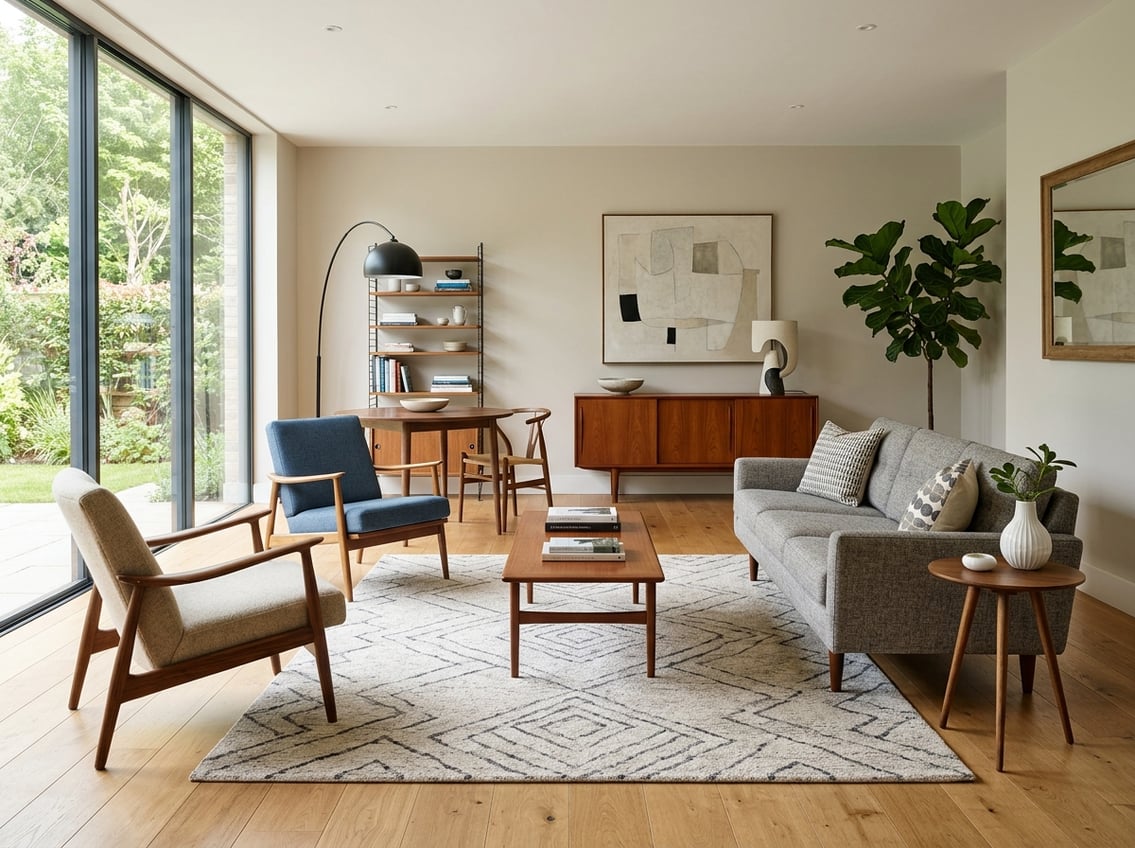
Mid-century modern furniture represents one of the most enduring design movements of the 20th century. Spanning roughly from the mid-1940s to the late 1960s, this style emphasised clean lines, functional forms, and innovative materials that changed how people furnished their homes. Today, these pieces remain highly sought after in vintage shops, estate sales, and online marketplaces.
When you spot authentic mid-century modern furniture pieces, knowing which ones are worth buying can save you from missing out on valuable finds that will enhance your home for decades to come. Some designs have become true classics because they combine beautiful aesthetics with practical everyday use. These pieces continue to hold their value and fit seamlessly into contemporary interiors.
This guide will walk you through the most iconic mid-century modern pieces across different categories. You'll learn about essential seating options, functional tables and storage solutions, and distinctive lighting that defined the era. Whether you're furnishing your first home or adding to an existing collection, understanding these key pieces will help you make informed decisions when you encounter them.
Essential Chairs of the Mid-Century Era
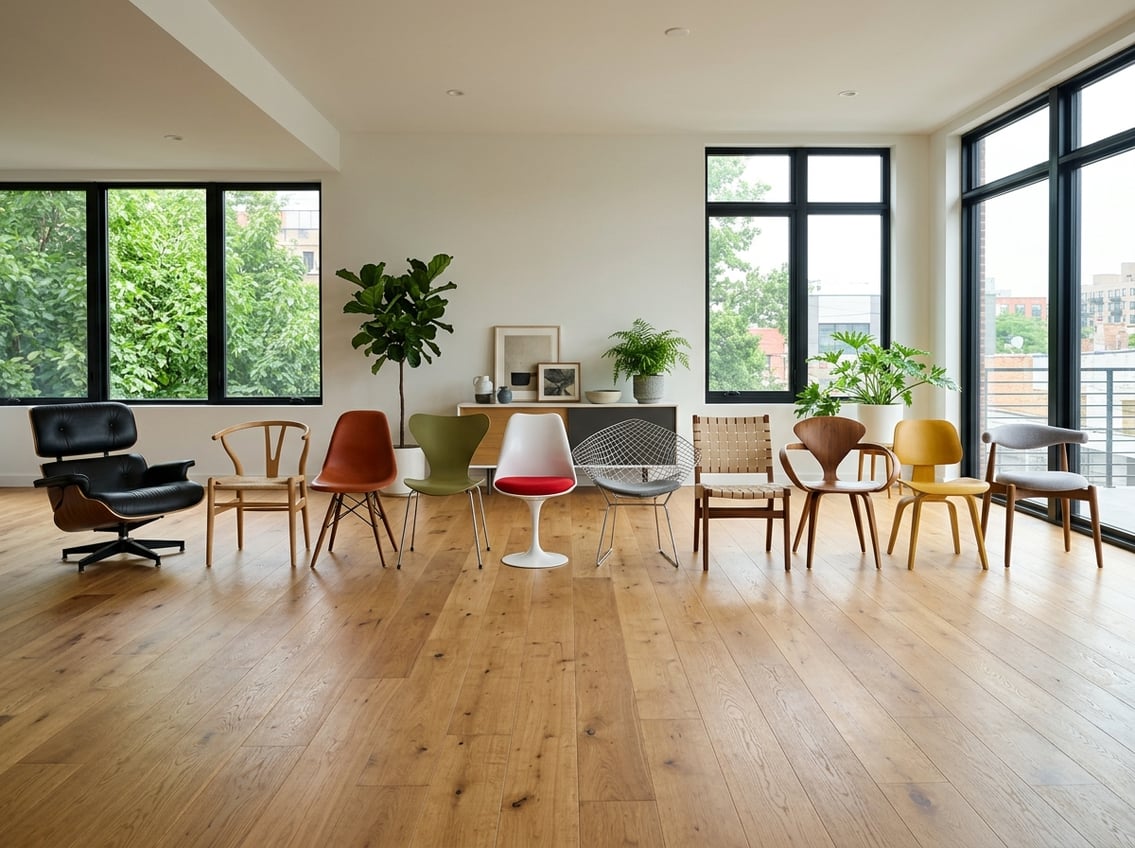
The most iconic mid-century modern chairs combine innovative materials with timeless design, making them valuable investments that hold their worth decades after production. These pieces transformed furniture from purely functional objects into sculptural statements that define interior spaces.
Eames Lounge Chair and Ottoman
The Eames Lounge Chair 670 and Ottoman 671 represent Charles and Ray Eames' most celebrated achievement in furniture design. Inspired by the comforting embrace of a baseball glove, this iconic pair was crafted to provide refuge from the pressures of modern living.
The chair went through two years of development before reaching its final form. Originally constructed from five layers of plywood, the design underwent countless modifications to perfect its comfort and aesthetic appeal.
Early editions hold the greatest value amongst collectors. The first 200 models featured original glove leather cushions filled with feather and down, making them exceptionally rare finds. These early versions are almost impossible to locate on the market today.
You'll notice variations between productions by Herman Miller and Vitra, which affects both value and authenticity. When evaluating an Eames lounge chair and ottoman, check for manufacturing marks and understand the differences between American and European production runs to determine fair pricing.
Egg Chair and Arne Jacobsen's Legacy
Arne Jacobsen designed the Egg Chair 3316 specifically for Room 606 in the SAS Hotel in Copenhagen. This sculptural piece exemplifies Jacobsen's ability to blend form with function whilst creating furniture that doubles as art.
The chair's curved, enveloping shape provides both comfort and visual impact. Its organic form was revolutionary for its time, moving away from the rigid lines that dominated earlier furniture design.
Original versions in duck egg blue from the SAS Hotel commission command premium prices. If you find an Arne Jacobsen egg chair with proven provenance connecting it to the original hotel installation, you've discovered a particularly valuable piece.
Jacobsen's other notable designs include the Ant 3100 from 1952 and the Swan 3320. His Grand Prix chair 4130 remains one of the most sought-after dining chairs by collectors, with early wooden-legged versions being especially prized. The production team at Fritz Hansen reissued the Grand Prix in 2014 after noticing the wooden-legged award-winning version was more in demand than the newer stackable metal-legged variant.
Barcelona Chair by Ludwig Mies van der Rohe
Ludwig Mies van der Rohe created the Barcelona Chair for the German Pavilion at the 1929 International Exposition in Barcelona. This chair embodies the principle "less is more" that defined Mies van der Rohe's architectural philosophy.
The design features a chrome-plated steel frame with leather cushions. Its X-shaped base and tufted leather seat create an elegant profile that works equally well in residential and commercial settings.
Original Knoll production pieces carry the highest value. Look for authentication marks and production stamps to verify authenticity, as numerous reproductions exist on the market.
The chair's timeless appeal stems from its perfect proportions and meticulous craftsmanship. Each piece requires skilled hand-welding and detailed leather work, which explains both its enduring quality and investment value.
Wishbone Chair by Hans Wegner
Hans Wegner designed the Wishbone Chair in 1949, creating one of the most recognised chairs of the mid-century era. Also known as the CH24, this dining chair combines sculptural beauty with practical comfort.
The chair's distinctive Y-shaped back gives it the wishbone name. Wegner used steam-bent wood for the backrest and a handwoven paper cord seat, requiring approximately 120 metres of cord per chair.
Key features of authentic Wishbone Chairs:
- Steam-bent ash or oak frame
- Hand-woven natural paper cord seat
- Maker's mark from Carl Hansen & Søn
- Smooth joinery without visible screws
Early production models from Carl Hansen & Søn carry greater value than later reproductions. The chair remains in continuous production, so verifying the production date helps you determine fair market pricing.
Wegner's commitment to craftsmanship shows in every detail. Each chair requires extensive hand-finishing, with the paper cord seat alone taking about an hour to complete by skilled artisans.
Tables and Benches That Shaped Modern Living Spaces
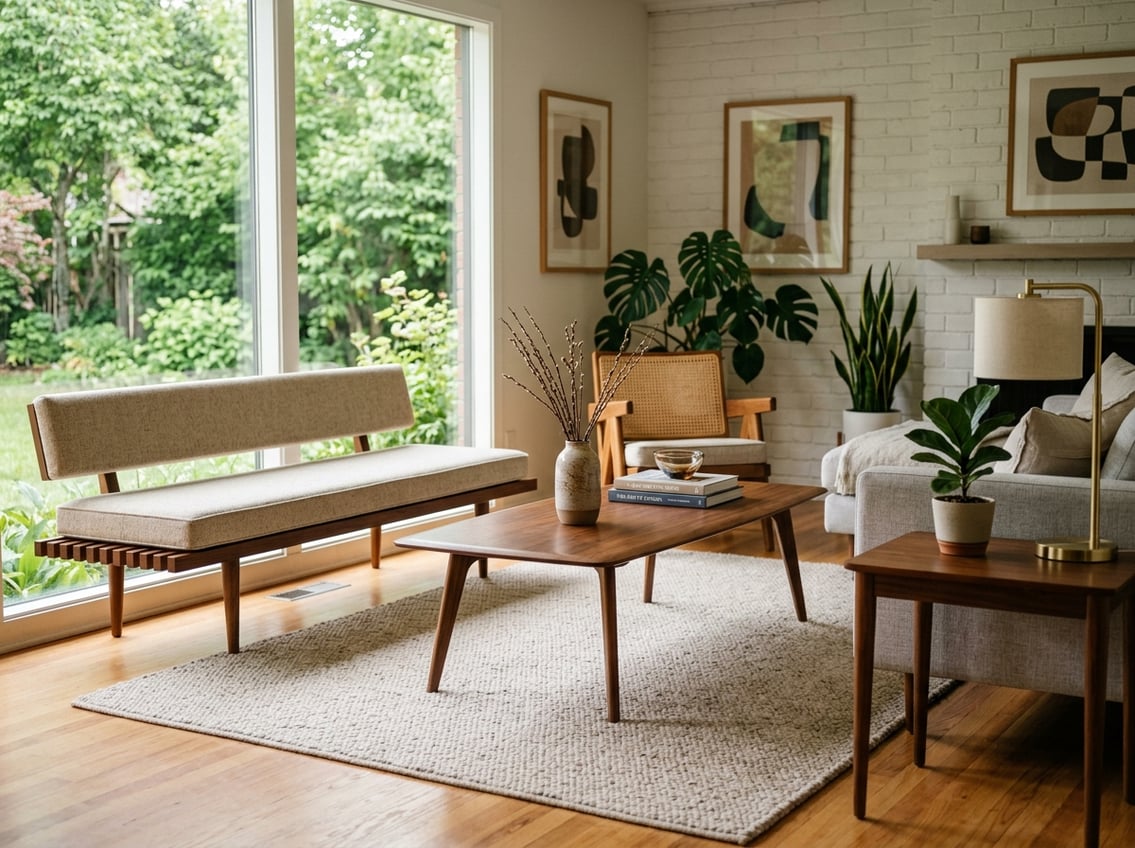
Mid-century designers transformed everyday furniture into sculptural works of art. These tables and benches combine clean lines with innovative materials that work in homes decades after their creation.
Noguchi Coffee Table as Artful Statement
The Noguchi Coffee Table stands as one of the most recognisable pieces in mid-century modern design. Isamu Noguchi created this sculptural table in 1947 after his apprenticeship with Constantin Brâncuși.
The design features two curved wooden base pieces that support a thick glass top. You can see the influence of Noguchi's sculpture background in every angle. The organic wood forms create different visual experiences as you walk around the table.
Key Design Elements:
- Free-form glass top measuring 15.75mm thick
- Two interlocking solid wood base pieces
- Available in walnut, birch, or ebony finishes
- Base height allows comfortable seating arrangements
This table works as both functional furniture and conversation piece. The sculptural quality means it enhances your space even when not in use.
Saarinen Tulip Table and Pedestal Table Innovations
Eero Saarinen designed the Pedestal Table in 1956 to solve what he called the "ugly, confusing, unrestful world" created by chair and table legs. The Saarinen Tulip Table features a single central column that eliminates leg clutter underneath.
The table's cast aluminium base supports tops in various materials including marble, laminate, and wood veneer. You'll find both dining and side table versions in round and oval shapes.
Saarinen's pedestal design creates more legroom and easier movement around the table. The single base means you can fit more chairs without anyone straddling awkward table legs. This practical innovation explains why the design remains popular in modern interiors.
George Nelson Platform Bench and Nelson Platform Bench
George Nelson designed the Platform Bench in 1946 as a versatile piece that functions as seating, table, or display surface. The slatted wooden top sits on black metal legs in a minimalist frame.
Common Uses:
- Coffee table in living rooms
- Bench seating in entryways
- TV stand or media console
- Plant display platform
The bench typically measures 122cm or 183cm in length with evenly spaced slats across the top. You can slide books, magazines, or baskets between the slats for creative storage solutions.
The Nelson Platform Bench adapts to whatever role your space requires. Its simple construction means it complements rather than competes with surrounding furniture pieces.
Storage, Sofas, and Sideboards: Versatile and Stylish Solutions
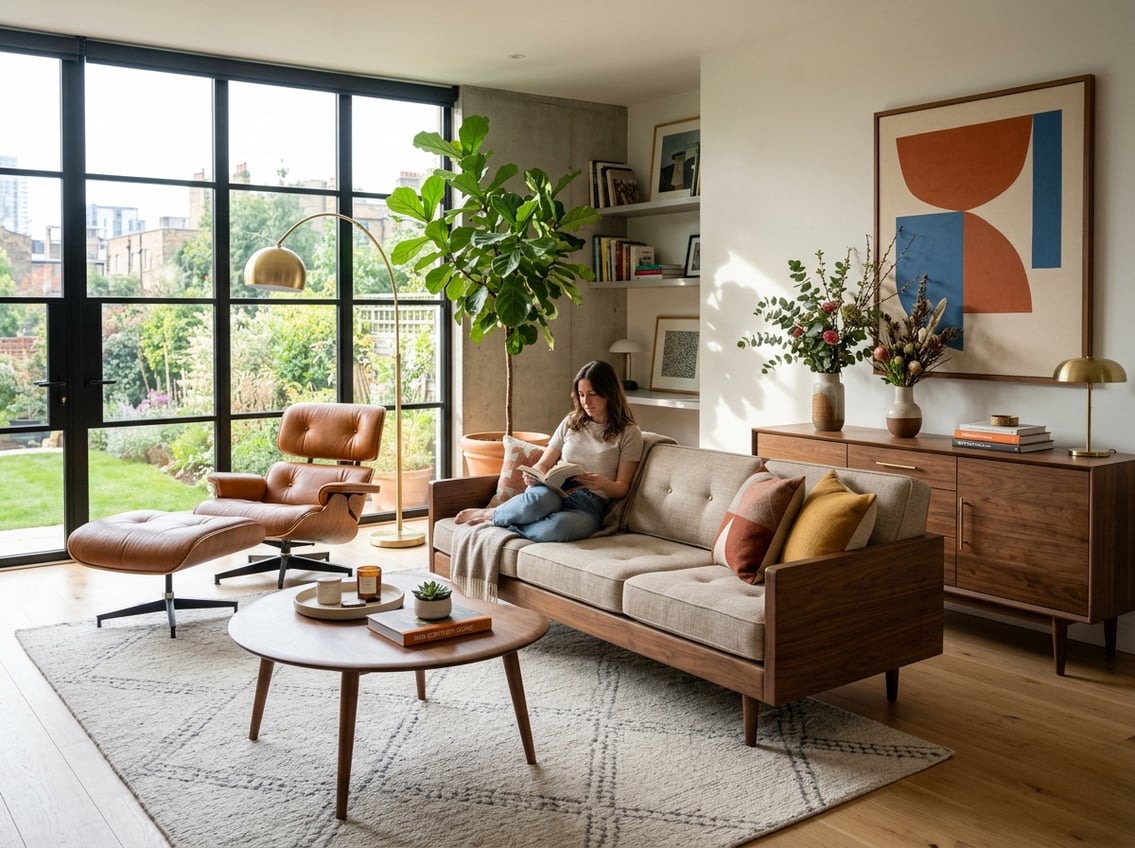
Three iconic pieces define mid-century furniture collecting: Florence Knoll's architectural seating that revolutionised office and home design, Danish teak sideboards prized for their warm wood tones and craftsmanship, and Broyhill Brasilia's distinctive sculptural storage that brings bold geometry to any room.
Florence Knoll Sofa and Influential Seating
The Florence Knoll sofa represents a turning point in furniture design. Knoll designed this piece in 1954 to fill what she called the "meat and potatoes" gap in modern furniture. The sofa features a boxy frame with chrome-plated steel legs and thin, tailored cushions that sit within the frame rather than on top of it.
You'll recognise authentic Florence Knoll sofas by their precise proportions and restrained aesthetic. The original three-seater measures 198 cm wide with a shallow seat depth of 79 cm. These dimensions reflect Knoll's architectural training under Mies van der Rohe.
Original pieces command high prices at auction, often reaching £8,000 to £15,000 depending on condition and upholstery. Later reproductions should be clearly described as such and valued separately from period originals. The sofa's clean lines work in both residential and commercial settings, making it one of the most versatile mid-century modern furniture investments you can make.
Danish Teak Sideboard and Teak Sideboards
Danish teak represents the pinnacle of Scandinavian craftsmanship from the 1950s and 1960s. A quality Danish teak sideboard features dovetail joinery, tambour doors that slide smoothly after decades, and adjustable shelving behind the doors.
Makers like H.P. Hansen, Arne Vodder, and Gunni Omann produced sideboards with oil-finished teak that develops a rich patina over time. You should look for pieces with maker's marks or stamps, though many excellent examples went unsigned. The wood grain should show consistent colour with minimal fading or water damage.
Teak sideboards typically measure 150 to 210 cm wide and stand about 76 cm tall. These proportions suit modern homes whilst providing substantial storage. Prices range from £600 for basic models to £3,000 or more for designer pieces. The warm tones of Danish teak complement contemporary interiors better than many darker wood finishes, which explains their enduring popularity in today's market.
Broyhill Brasilia and Sculptural Storage
Broyhill Brasilia launched in 1962 as an American interpretation of Scandinavian design with bolder, more dramatic lines. The collection features distinctive cathedral-shaped drawer pulls, walnut veneer with contrasting lighter wood accents, and angular legs that taper to brass-capped feet.
The Brasilia dresser stands out with its asymmetrical drawer configuration and geometric walnut inlay patterns. You'll find nine-drawer tall chests, triple dressers, and companion nightstands that share the same design language. Original pieces bear the Broyhill Brasilia label inside drawers or on the back panel.
This collection costs considerably less than Danish imports, with dressers selling for £400 to £1,200 depending on condition. The sculptural quality of Broyhill Brasilia makes it statement furniture rather than background pieces. Edge wear on the walnut veneer is common but acceptable if the distinctive brass hardware remains intact. The collection's bold aesthetic suits spaces where you want storage that commands attention rather than blends in.
Lighting and Decor Icons That Defined the Era
Mid-century lighting and decorative pieces brought sculptural forms and innovative materials into everyday homes. These designs balanced function with artistic expression, creating pieces that remain highly collectible today.
Sunburst Clock by George Nelson
George Nelson's sunburst clock became one of the most recognizable decorative objects of the 1950s. The design features a central round clock face with radiating spokes tipped with wooden balls or metal points, resembling a starburst.
Nelson created multiple variations for the Howard Miller Clock Company starting in 1948. You'll find versions with brass rods, wooden spheres, and multicoloured tips. The original designs used battery-powered mechanisms that were revolutionary for home clocks at the time.
These clocks weren't just timepieces. They served as wall sculpture that embodied the optimism and atomic-age aesthetics of post-war America. Original vintage examples command premium prices, whilst licensed reproductions offer more affordable options. Look for the Howard Miller manufacturer's mark on the back to verify authenticity.
Bubble Lamp and Lighting Innovations
The bubble lamp collection transformed simple materials into elegant lighting solutions. Designer George Nelson developed these lamps in 1952 using a plastic spray process originally created for military purposes during the war.
The collection includes pendant lamps, floor lamps, and table lamps in various shapes like spheres, saucers, and elongated forms. Mid-century lighting designers used modern materials and sculptural forms to create pieces that diffused light beautifully whilst serving as artistic focal points.
Original bubble lamps featured steel frames covered in translucent plastic webbing. The material created a soft, even glow that worked well in open-plan spaces. You can identify authentic pieces by examining the quality of the webbing and the manufacturer's labels from Howard Miller or Herman Miller.
Arco Floor Lamp and Statement Lighting
The Arco floor lamp revolutionised interior lighting when it launched in 1962. Designed by Achille and Pier Giacomo Castiglioni for Flos, this piece solved a practical problem with architectural elegance.
The lamp features a stainless steel arc that extends from a heavy Carrara marble base, suspending an aluminium dome shade overhead. This design allows you to position light over a dining table or seating area without installing ceiling fixtures. The marble base weighs 65 kilograms, providing stability for the dramatic cantilever.
Authentic Arco lamps bear the Flos manufacturer's mark and use genuine Carrara marble. The adjustable height and rotating shade make it highly functional. Vintage originals and current production models both hold value, though the Castiglioni brothers' designs remain amongst the most innovative pieces from the era.
Honourable Mentions and Contemporary Influence
Beyond the marquee pieces that dominate auction houses, several designs deserve recognition for their craftsmanship and enduring appeal. The influence of Scandinavian design continues to shape contemporary interiors, whilst the movement's core values remain relevant decades after its peak.
Other Collectible Classics: Platform Bench, Womb Chair, Panton Chair
The George Nelson Platform Bench stands as one of the most versatile mid-century modern designs you can find. Its slatted wood construction and simple metal legs make it equally at home as a coffee table, bench, or display surface. Production pieces from Herman Miller fetch between £800 and £2,000, depending on condition and provenance.
The Womb Chair transformed modernist comfort when Eero Saarinen designed it for Florence Knoll in 1948. Its enveloping fibreglass shell lets you curl up sideways, challenging the rigid posture demanded by earlier lounge chairs. Early examples brought £17,920 at auction, whilst contemporary versions from Knoll remain in steady demand.
Verner Panton's S-shaped Panton Chair broke new ground in 1967 as the first single-piece plastic chair. Its cantilevered form eliminated traditional legs entirely, creating a sculptural statement that epitomised Space Age design. Original Vitra production pieces command premium prices amongst collectors who value its radical departure from conventional seating.
Danish Modern and Scandinavian Influence in Teak and Sideboards
Danish craftsmen brought warmth to midcentury modern design through their emphasis on natural materials and handwork. Teak became the defining wood of this movement, prized for its rich colour and durability.
Teak sideboards by makers like Arne Vodder and H.P. Hansen represent some of the most sought-after Danish pieces. These low-slung credenzas feature sliding doors, adjustable shelving, and meticulous joinery that showcases traditional woodworking techniques. You'll find authentic examples ranging from £1,500 for simpler designs to over £8,000 for rare configurations with built-in bars or drop-front desks.
The Scandinavian approach balanced minimalist aesthetics with organic forms. This fusion made pieces feel both refined and approachable, suitable for everyday living rather than museum display.
Lasting Legacy: The Ongoing Popularity and Value of Mid-Century Pieces
Mid-century modern furniture has transcended vintage status to become a permanent fixture in contemporary design. Major manufacturers continue producing licensed reissues, ensuring these forms remain accessible beyond the collector market.
Investment value varies significantly based on provenance and condition. Original production pieces with manufacturer stamps typically appreciate steadily, particularly rare colourways or limited runs. A set of vintage Wishbone Chairs reached £9,450 at auction, whilst similar reproductions sell for a fraction of that price.
The movement's enduring appeal stems from its focus on clean lines and functional forms that adapt to changing interior trends. These pieces integrate seamlessly into both period-appropriate settings and contemporary spaces. You're investing not just in furniture, but in designs that have proven their relevance across seven decades of shifting tastes.